
Insight · 22 July 2026
How to Read a Barrier Spec Without Getting Fooled
OTR and MVTR numbers are quoted at conditions that rarely match your supply chain. Here is what to check before comparing two structures.
Ace Packaging Inc.
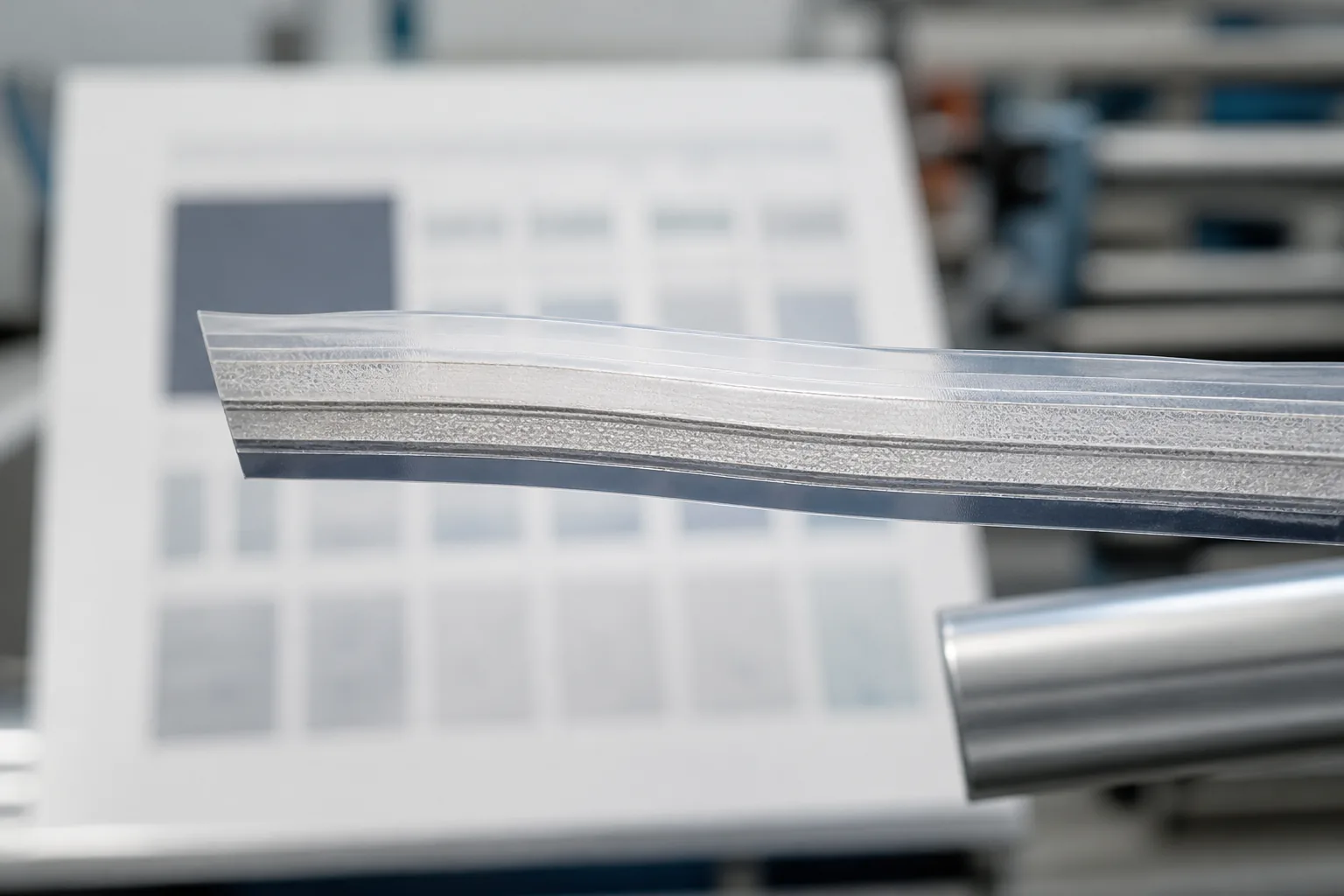
Barrier numbers look objective. They are not, quite - not because anyone is lying, but because oxygen transmission rate and moisture vapour transmission rate are both measured at specified temperature and humidity, and those conditions are not standardised across every published figure you will be shown.
Check the test conditions first
An OTR quoted at 23°C and 0% relative humidity is a different number to the same structure at 23°C and 90% RH. For EVOH-containing structures the gap is large, because EVOH loses barrier as it takes up moisture. If your product sits in a humid warehouse or a chilled cabinet, the dry number is not the one that will govern your shelf life.
Ask what is actually degrading the product
Barrier is a means to a shelf life, and the mechanism matters. Oxidative rancidity in a high-fat product is an oxygen problem. Loss of crispness is a moisture problem. Colour fade is often a light problem that no barrier layer addresses. Specifying a heavy oxygen barrier for a product failing on moisture ingress is expensive and ineffective.
Right-size rather than maximise
The most common overspecification we see is a barrier sized for a shelf life claim the brand no longer makes. Products get reformulated, distribution gets faster, claims get revised - and the structure never gets revisited. A barrier review on a mature SKU frequently takes real cost out with no change to the shelf-life position.
If you want a second opinion on a structure you are already running, send us the specification and the shelf-life claim. That review costs you nothing.