
Guide · 14 May 2026
Air Column vs Loose Fill for Bottle Shipping: The Real Numbers
Damage rate, storage footprint and pack bench time - the three variables that decide protective packaging cost, and how the two systems compare.
Ace Packaging Inc.
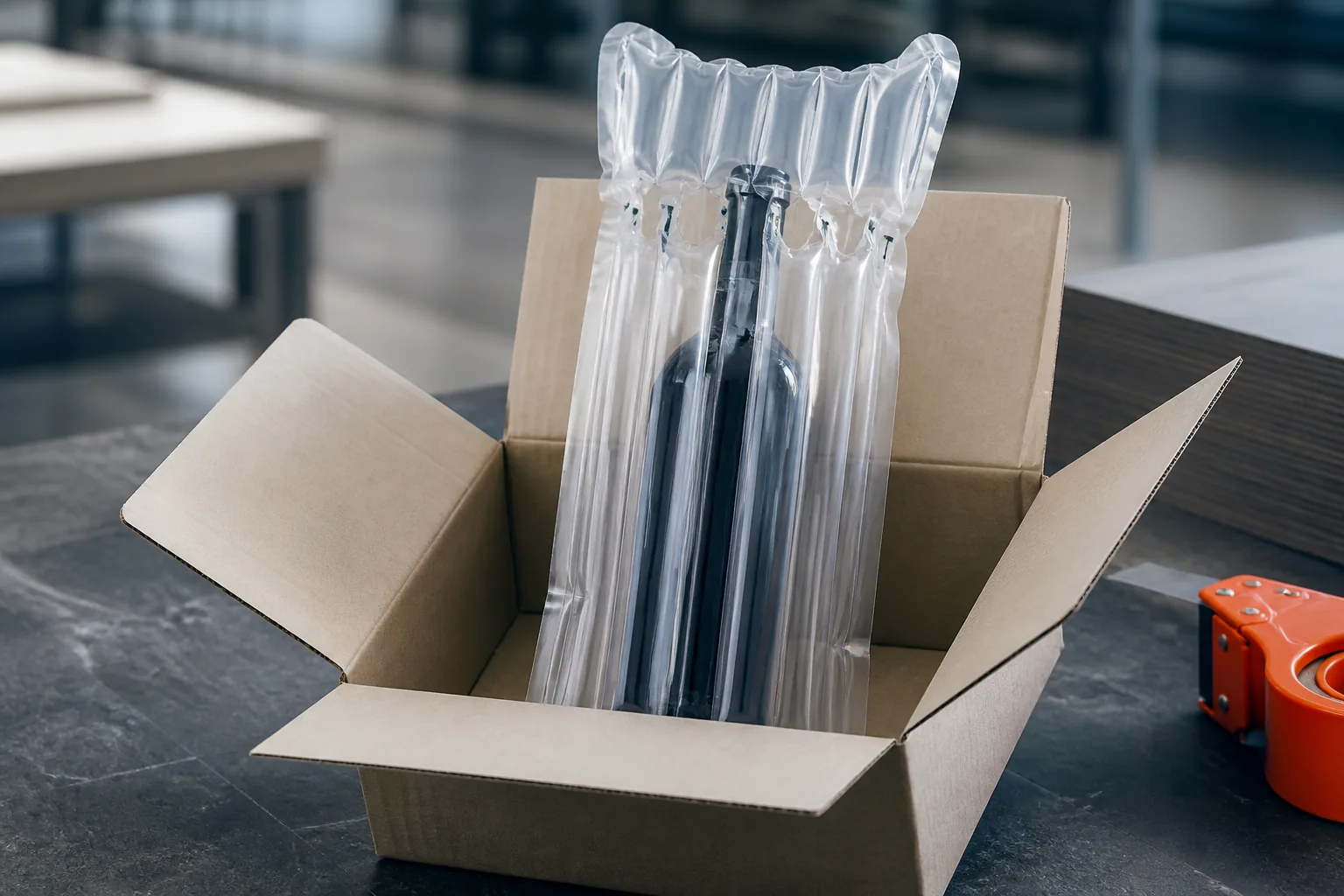
Protective packaging is bought on unit price and paid for on damage rate. For glass bottles going through a parcel network, those two numbers diverge sharply, and the cheapest material per unit is rarely the cheapest system.
Damage rate
Loose fill protects by filling void. It works until the carton is handled on end, at which point the fill migrates and the bottle finds the wall. Air column protects by suspending the bottle in a structured chamber array, and because each column seals independently, a puncture in one does not collapse the system.
That independence is the whole argument. A single-chamber inflatable that loses pressure has become packing paper.
Storage footprint
Loose fill arrives inflated. You are renting warehouse space for air, seasonally, in the quarter when you have the least of it to spare. Air column film arrives on rolls and inflates at the bench - typically a ninety-plus percent reduction in inbound protective cube.
Pack bench time
This one is closer than people expect. Loose fill is faster to dispense; air column is faster to position correctly. In practice, on bottle work, they are broadly comparable and the difference is swamped by the damage-rate gap.
Where loose fill still wins
Mixed-SKU fulfilment with irregular items and unpredictable void shapes. Air column is a structured solution and it wants a predictable product geometry. If every order is a different shape, void fill is the more practical answer.